 Français
 English

Blog - whats new?
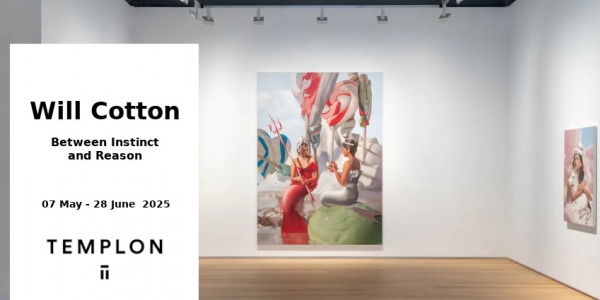
TEMPLON New York is proud to present its first exhibition by American painter Will Cotton. In this new body of work, Between Instinct and Reason, the artist continues to reflect on pop culture and a new American mythology. In Cotton’s world of sugary treats, pink unicorns, and hypermasculine cowboys, he is now introducing a new player: the mermaid.
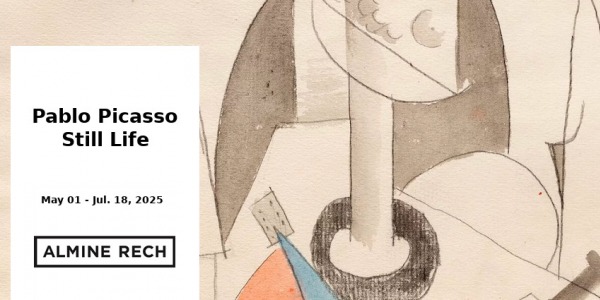
Almine Rech New York is pleased to present 'Pablo Picasso: Still Life,' in collaboration with Fundación Almine y Bernard Ruiz-Picasso. The exhibition will be on view from May 1 to July 18, 2025, at the gallery’s Upper East Side location.
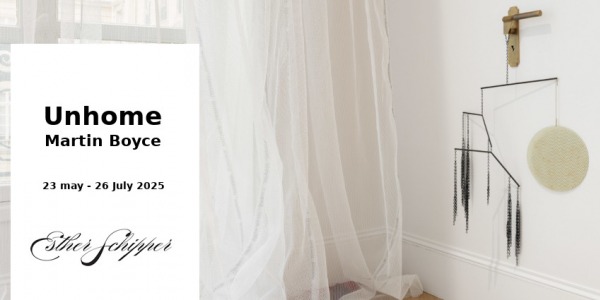
Esther Schipper is pleased to present Unhome, Martin Boyce’s second solo exhibition with the gallery, and his first in our Paris space. In Unhome, Boyce invites viewers to reconsider the boundaries between the intimate and the domestic, introducing a sense of eeriness and uncertainty into our perception of familiar spaces. At our gallery located on Place Vendôme, he unveils a collection of new sculptures and photographic works, brought together in an immersive installation that oscillates between decay and renewal, offering a sensitive meditation on the passage of time.
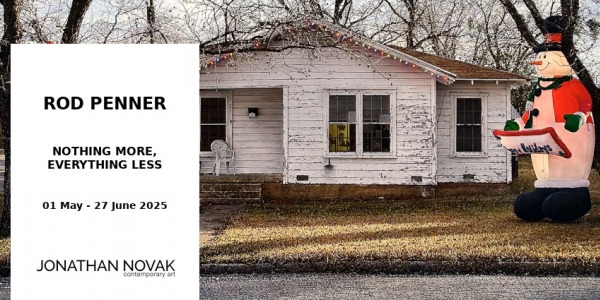
Rod Penner is one of the most important Photorealists working today. Mr. Penner is a Texas-based artist recognized for his meticulously detailed, photo-informed paintings that depict the quiet beauty of abandoned and forgotten landscapes in small Texas towns. Though his chosen scenes often reflect remnants of past prosperity, Penner imbues them with a warm, cinematic quality through his mastery of light and texture. His paintings serve as meditations on time, memory, and the essence of place, evoking a deep emotional resonance. Art historian and writer John Seed describes his work as possessing a “profound and genuine sense of American culture,” noting Penner’s singular vision as an artist.To see one of Penner’s paintings in a gallery is to feel like you are in the presence of something that has never been seen before. The feeling is paradoxical since the cafes, bait shops, truck stops and clapboard houses that are his subjects should be familiar to anyone who has ever driven a rural highway on the outskirts of a big American city. It’s a testament to Penner’s art that the intensity and seamlessness of his paintings is so complete that anything he paints feels like a revelation. He paints kiddie pools, gas pumps, gravel driveways and power poles with a power of inspection best described as reverence. Penner’s visual acuity, which is rooted in a deep sense of caring about the world around him, is an expression of honesty, directly linked with a respect for reality. But there is much more going on than visual truth-telling.
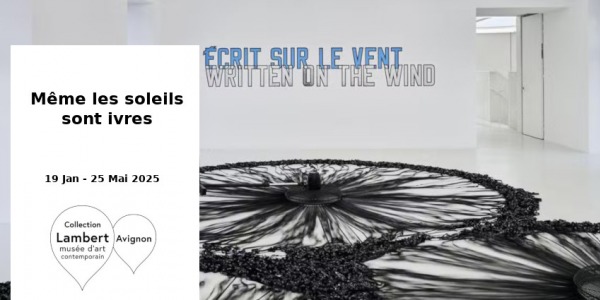
Conceived as part of the Avignon Terre de culture 2025 / Curiosité(s) celebrations, the exhibition Même les soleils sont ivres borrows its title from a phrase by Albert Camus from La Postérité du soleil, a book produced in the Vaucluse region with Swiss photographer Henriette Grindat, with a magnificent preface by his friend the poet René Char. The collection of contemporary and classical works on display in the rooms of the Hôtel de Montfaucon – installations, videos, photographs, sculptures and paintings – offers a multitude of sensory experiences, recounting the sensitive relationship that people have with the land they inhabit, imbued with the particularities of a climate that the wind irrevocably affects.
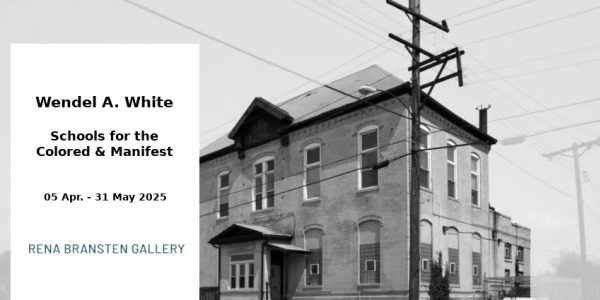
Schools for the Colored, carefully selected from a larger portfolio of the same name, looks at the physical structures – both standing and demolished – of segregated schools of New Jersey, Pennsylvania, Ohio, Indiana, and Illinois. In these black and white prints, the buildings that still exist are photographically represented, and the schools that have been destroyed are depicted by black silhouettes of those structures, nodding to the way space can hold invisible memories of the past. While the former schools and silhouettes are sharply in focus, the surrounding landscape is masked as if faded, a reference to W. E. B. DuBois’ literary metaphor (from The Souls of Black Folk) of the veil as a social barrier.
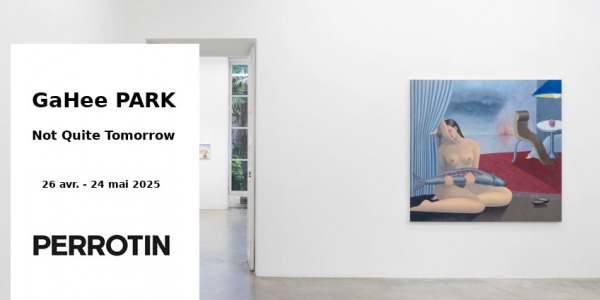
The strange and ethereal world of GaHee Park’s paintings is populated with doubles of various kinds. Whether as shadow figures or gleaming reflections, an extra set of limbs or lips, a bird or a woman with an extra eye, these are not identical doppelgangers but they are nevertheless uncanny. Often the effect of this doubling is something like that of a reversible image: focusing on one mouth, the figure seems content, focusing on the other mouth, she seems forlorn. Our own gaze is itself doubled by the mechanisms of Park’s skilled doubling. Borrowing a moniker once given to René Magritte, we might dub GaHee Park the Master of the double take
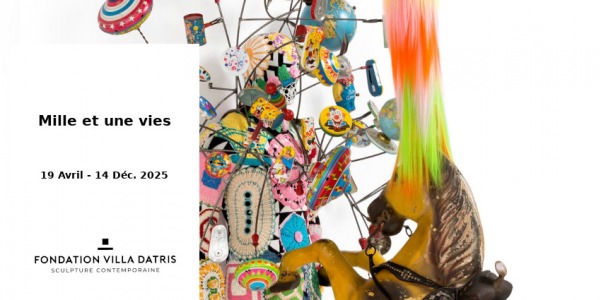
Du 19 avril au 14 décembre, à travers une sélection de plus de trente sculptures d’artistes français et internationaux, l’exposition Mille et une vies propose un parcours illustrant les différentes facettes de l’individu en tant qu’être naturel et social, intime et universel.
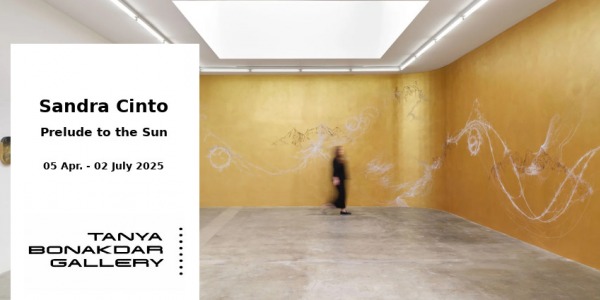
Tanya Bonakdar Gallery is pleased to announce Prelude to the Sun, a solo exhibition of new work by Sandra Cinto in Los Angeles, on view through July 2, 2025. This will be the artist’s eleventh show with the gallery and second in Los Angeles.