
 Français
 English


DOCU // THE CASE FOR JACKSON POLLOCK (11mn) // THE ART ASSIGNEMENT
- A écouter - Sélection de podcast
- 1334 vues
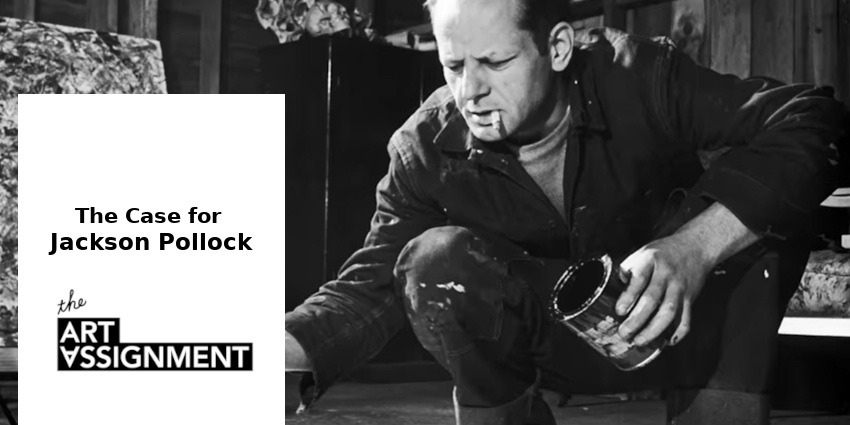
The Case for Jackson Pollock (11mn)
by The Art Assignement
You’ve heard of Jackson Pollock and know of his infamous “drip paintings,” but what is it that you’re supposed to do when you look at his work today? Why did it cause shockwaves in 1947, and what does it mean now? We explore the life, evolution, and legacy of Jackson Pollock.
Jackson Pollock (1912-1956) was an influential American painter and a major figure in the abstract expressionist movement. He is best known for his unique style of drip painting. Pollock's technique of pouring or splashing paint onto a horizontal surface, a method he dubbed "action painting," allowed him to view and apply paint from all angles. His work was revolutionary in its abandonment of traditional paintbrush methods. Pollock's chaotic and energetic art mirrored his tumultuous personal life, marked by alcoholism and a volatile personality. His most famous works include "Number 1" (1949), "Blue Poles" (1952), and "Convergence" (1952). Pollock's legacy lies in his radical break from conventional painting techniques and his influence on the course of American art.
>> see on You tube : The Case for Jackson Pollock (11mn)